City 01- Reach out via e-mail: localidade1@gml.com
City 02- Reach out via e-mail: localidade1@gml.com
Em caso de dúvidas preencha o formulário a baixo
telepathy
te·lep·a·thy n
Claims for the direct transmission of information, at a distance, between people, despite full sensory shielding
experiment
ex·per·i·ment n
A scientific analysis or procedure whose objective is to investigate a particular phenomenon
Over the past 50 years, many laboratory studies have claimed evidence for telepathy when the so-called “Ganzfeld protocol” was applied.
Now, a large-scale metascientific replication project is being undertaken to examine whether the extraordinary claim of the existence of telepathy, as reported in these studies, can be confirmed through rigorous and advanced scientific methodologies. Six laboratories from the United States, Europe, and South America, and nine Principal Investigators, collaborated to design and execute the protocol.
This website was created to invite you to support this project as a participant in the experiment. For information on the scientific and technical aspects of this multi-laboratory replication project, please visit the website of the Paradox Science Institute, which developed, funds and organizes this research:
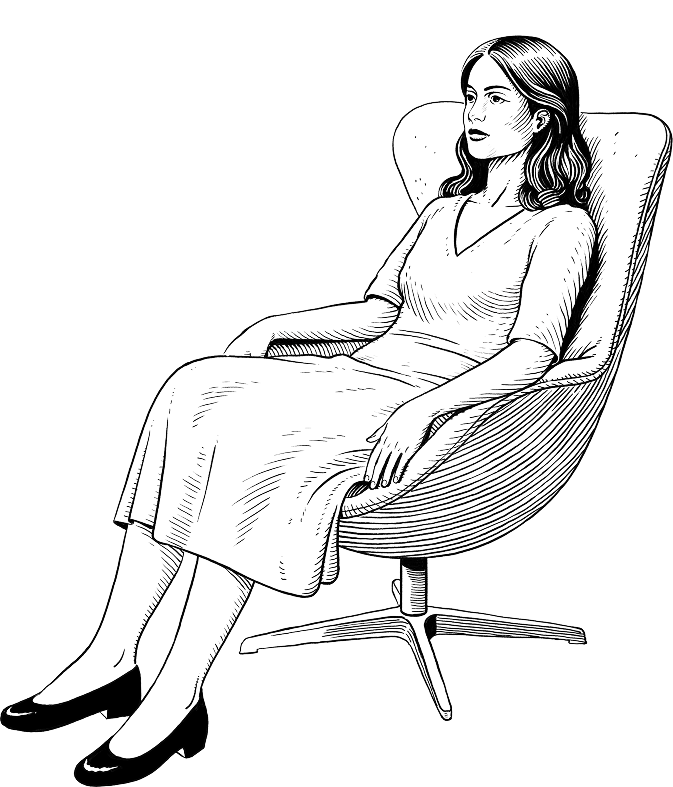
In the Ganzfeld protocol, two individuals participate in the experiment in separate rooms, sensory-shielded one from the other: one assumes the role of sender, attempting to mentally transmit the content of a video, while the other, the receiver, freely reports the perceptions and impressions that arise in their mind.
After 25 minutes of transmission, the receiver is shown four different videos, one of which is the transmitted video. Their task is then to identify which video was the target.
The hit rate obtained across the set of sessions makes it possible to assess whether the results are compatible with the 25% average success rate expected by chance or whether they exceed this value, thereby providing evidence in favor of the telepathy hypothesis.
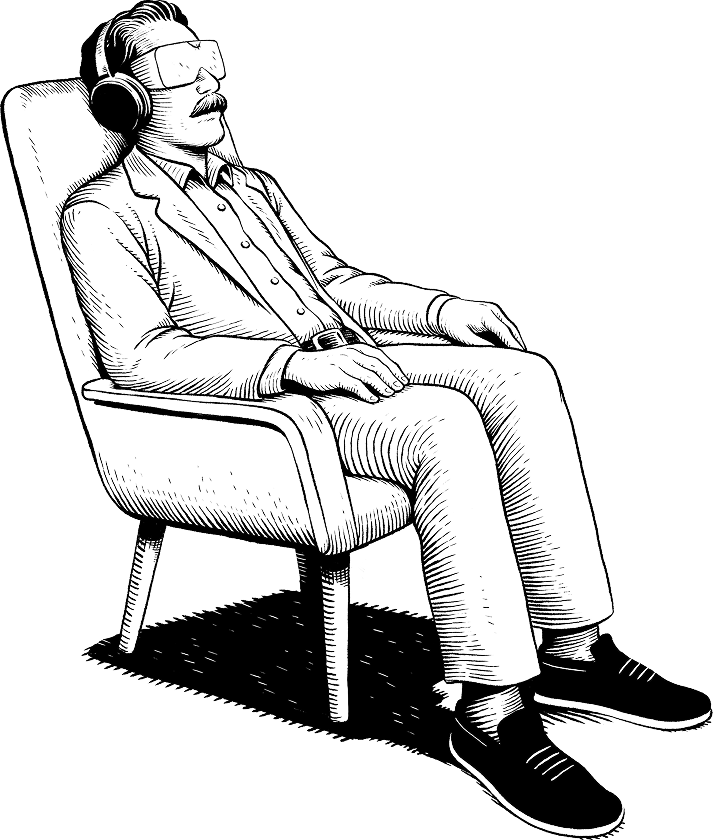
It is a state induced by perceptual deprivation: the receiver wears goggles that produce a uniform red light without defined shapes, while listening to a continuous sound (white noise) through headphones. This procedure reduces external sensory stimuli, promoting greater focus on one’s own mental images and internal sensations.
The rationale is that, with reduced sensory distractions, the mind may become more sensitive to subtle signals, including the purported telepathic information.
Click the “Participate” link and complete the screening questionnaire to determine whether you are eligible for the study. You may indicate a preferred partner with whom you would like take part in the experiment; however, participation is also possible without a pre-existing partner, in which case the organizers will pair you with another registered participant. No prior experience is required — curiosity and an open mind are sufficient.
Participation takes place in person and lasts approximately 100 minutes overall — including preparation, instructions, relaxation and the experimental session. Additional relevant details — such as location, eligibility criteria, and practical guidelines — will be provided to participants in advance.
This initiative applies rigorous and advanced methodologies in both experimental design and session conduct. These include enhanced control procedures and systematic participant monitoring, aimed at minimizing bias and reducing the risk of fraud.
The research is conducted in collaboration with international centers, enabling the collection of one of the largest datasets assembled to date for this type of investigation, thereby ensuring high statistical power and the robustness of the results.
For more details on the scientific rationale and the technical aspects of this replication project, please visit the website of the Paradox Science Institute:
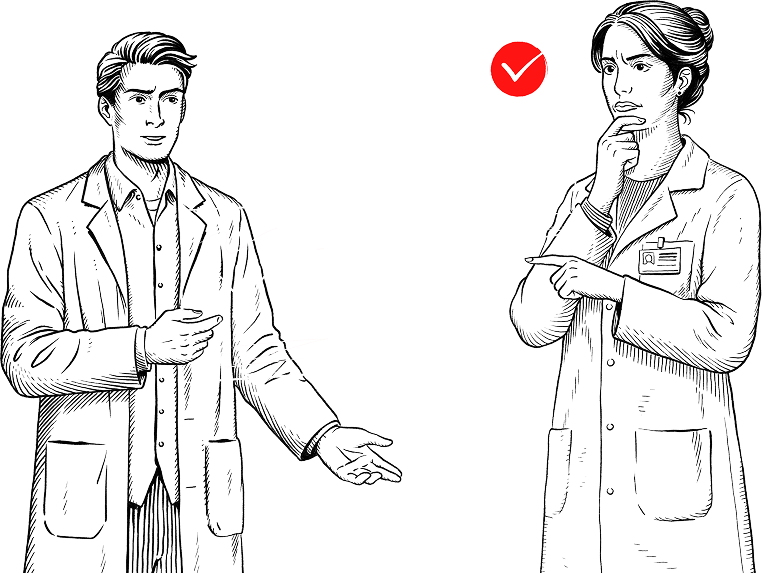

The experiments are being conducted simultaneously at multiple research centers around the world, through a collaboration among different universities and institutes that follow the same standardized protocol.
The experiment will take place at the following centers:
Telepathy is the idea that one person could send and receive thoughts, feelings, or images directly to another person’s mind, without using any ordinary verbal or non-verbal communication such as speech, gestures, touch, or facial expressions.
The Paradox Science Institute conceived, funded, and promotes this research. For additional information on the technical aspects of the GML Project, please visit the Paradox Institute website.
https://paradoxscience.org/
The “Ganzfeld Protocol” campaign was developed pro bono by a group of communication and advertising specialists passionate about frontier science.
Its goal is to spark interest and engage participants in this telepathy experiment, while also seeking to broaden and diversify the participant pool, thereby directly contributing to the scientific investigation.